Korean Glass Skin vs. Conventional Salon Bleach Facials
Executive Summary: The Death of the Chemical Bleach Paradigm
For over three decades, neighborhood beauty parlors across North India conditioned clients to believe that golden facial hair and chemical burning equate to skin radiance. Dermatological science has thoroughly debunked this premise. Chemical bleach destroys the protective stratum corneum, triggers post-inflammatory hyperpigmentation (PIH), and damages melanin-rich Indian skin.
In contrast, the Korean Glass Skin protocol operates on biological restoration: infusing low-molecular weight hyaluronic acid, biomimetic plant peptides, and multi-ceramides through sealed mono-dose ampoules to generate genuine luminous translucency.
1. The Dermatological Danger of Chemical Bleach on Indian Skin
Indian complexions fall predominantly between Fitzpatrick Skin Types III, IV, and V. Melanin synthesis in these phototypes is highly responsive to cutaneous trauma.
┌────────────────────────────────────────────────────────────────────────┐
│                   THE SALON BLEACH DAMAGE CYCLE                        │
├────────────────────────────────────────────────────────────────────────┤
│ 1. Hydrogen Peroxide + Ammonia applied to facial epidermis.            │
│ 2. Alkaline pH (9.5–10.5) strips acidic skin mantle (pH 5.5).         │
│ 3. Keratin denaturation: Skin feels "tight" and temporarily lightened. │
│ 4. Melanosome defense activation: Rebound hyperpigmentation / Melasma. │
│ 5. Permanent barrier thinning and accelerated solar photo-aging.       │
└────────────────────────────────────────────────────────────────────────┘
1.1 Why Traditional Salon Bleach Destroys Skin Health
- Ammonium Hydroxide Burns: Uncalibrated powder bleach mixed in plastic salon bowls releases free radicals that damage dermal fibroblasts.
- Follicular Brittleness: Bleaching fine vellus hair makes the hair cortex brittle, causing blunt regrowth that feels prickly to the touch.
- Rebound Hyperpigmentation: The skin interprets chemical burning as physical trauma, prompting melanocytes to deposit dense dark melanin over the cheeks and upper lip.
2. Comparative Matrix: Salon Bleach vs. Korean Glass Skin
| Feature Parameter | Traditional Salon Bleach Facial | Korean Glass Skin Protocol |
|---|---|---|
| Primary Mechanism | Chemical oxidation of hair melanin | Deep trans-epidermal hydration & barrier repair |
| Active Formulation | Hydrogen peroxide & ammonia powder | Oligopeptides, Centella Asiatica & Hyaluronic acid |
| Packaging Protocol | Bulk 500g plastic salon tubs (air-exposed) | Nitrogen-sealed, single-use mono-dose ampoules |
| Skin Barrier Effect | Severely compromised; moisture loss spikes | Rebuilt with bio-identical ceramides |
| Optical Finish | Chalky, uneven yellowed facial fuzz | Plump, translucent, glass-like luminosity |
| Long-Term Safety | High risk of melasma, dryness & chemical burns | Clinically proven for sensitive & reactive skin |
| Downtime | 24–48 hours of redness & sun sensitivity | Zero downtime; immediate cosmetic radiance |
3. The 7-Step Korean Glass Skin Protocol at DoorStep Diva
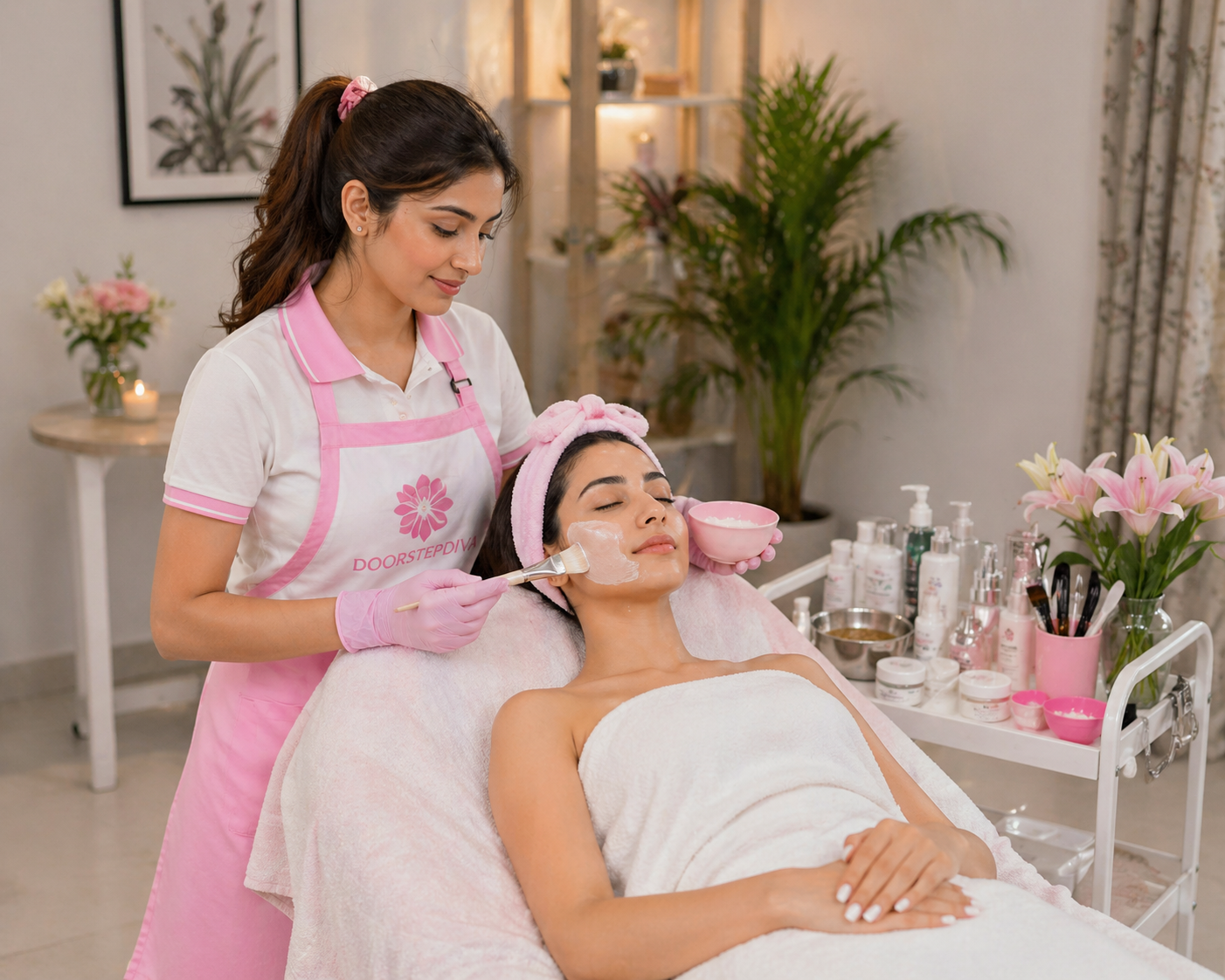
Our certified female estheticians perform this clinical ritual in the comfort and privacy of your home:
Step 1: Double Cleansing with Hydrophilic Botanical Oils
Dissolves atmospheric particulate matter (PM2.5) and stubborn sebum without stripping natural dermal lipids.
Step 2: Enzyme Micro-Exfoliation (Non-Abrasive)
Papaya and rice enzyme powders gently digest dead desmosome protein bonds. Unlike harsh walnut scrubs, this creates zero microscopic dermal abrasions.
Step 3: Phyto-Toning & Acid Mantle Calibration
A bio-fermented galactomyces essence balances skin pH to 5.5, preparing follicular channels for transdermal peptide absorption.
Step 4: Nitrogen-Sealed Mono-Dose Peptide Infusion
Opened directly in front of the client, each clinical ampoule contains concentrated copper tripeptides and multi-molecular hyaluronic acid.
Step 5: Ultrasonic Cryo-Globe Lymphatic Drainage
Surgical-grade stainless steel cryo-globes cooled to 4°C are glided across facial lymph contours to eliminate puffiness and tighten pore elasticity.
Step 6: Hydro-Jelly Occlusive Alginate Mask
A medical-grade peel-off rubber mask locks in the peptide serum, preventing evaporation and forcing active molecules into cellular layers.
Step 7: Ceramide NP Barrier Seal & SPF 50 Shield
Finished with a light-reflecting ceramide shield that imparts an immediate, healthy glow that lasts for weeks.
4. Addressing Local Climate Factors: Delhi NCR vs. Lucknow
Skin barrier restoration must be calibrated to urban atmospheric realities:
- Delhi NCR: Winter inversion traps toxic particulate matter (PM2.5/PM10). Our protocol incorporates ectoin and superoxide dismutase to neutralize free radical air pollutants.
- Lucknow & Central UP: High subtropical humidity causes sebaceous clogging. Our specialists use lightweight gel emulsions rather than heavy comedogenic creams.
Frequently Asked Questions
How long does the Korean Glass Skin effect last?
With proper home hydration maintenance, the plump, translucent luminosity endures for 3 to 4 weeks. We recommend a monthly cadence for cumulative collagen synthesis.
Is the treatment safe for acne-prone or sensitive skin?
Yes. Because the protocol relies on soothing anti-inflammatory plant peptides and zero abrasive scrubs or bleach, it calms active redness and strengthens compromised skin barriers.
Experience Clinical Glass Skin at Home
Transform your skin without parlor exposure. Book a certified female esthetician equipped with sealed mono-dose kits dispatched directly to your residence.
- Explore Facials: Signature Skin Services
- Direct Online Booking: Book Your Facial or chat on WhatsApp at +91 9129577514